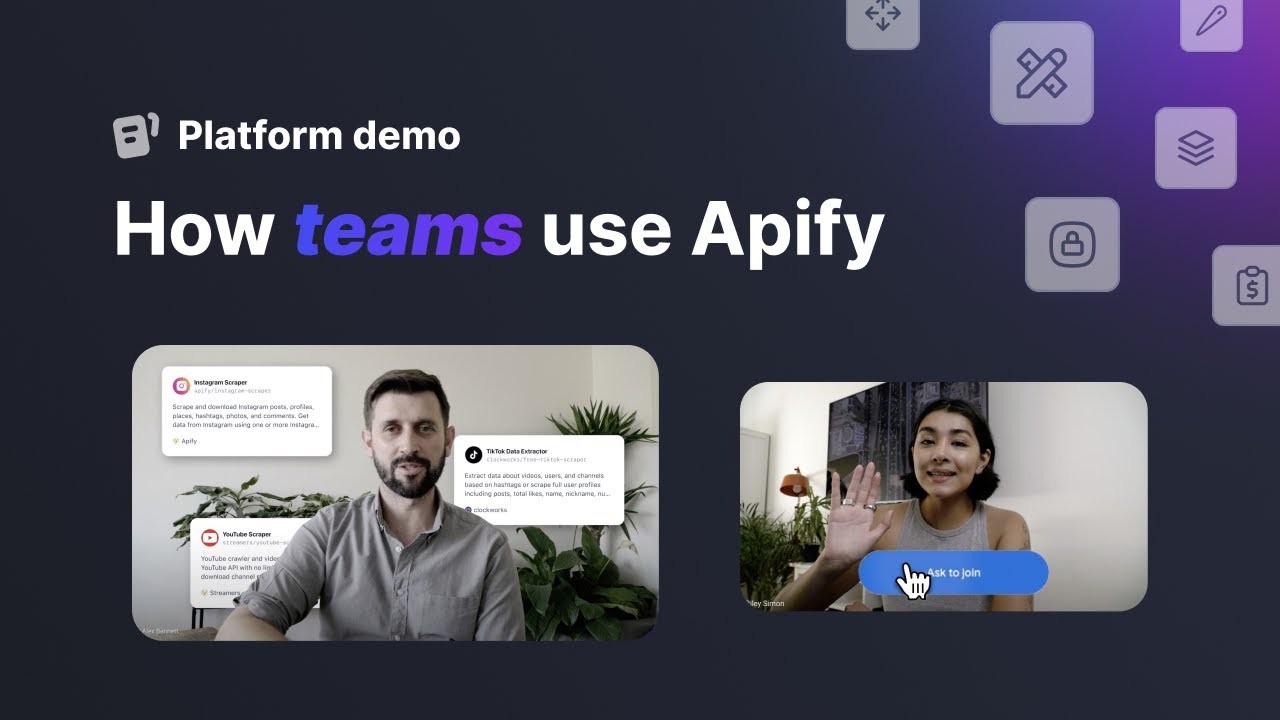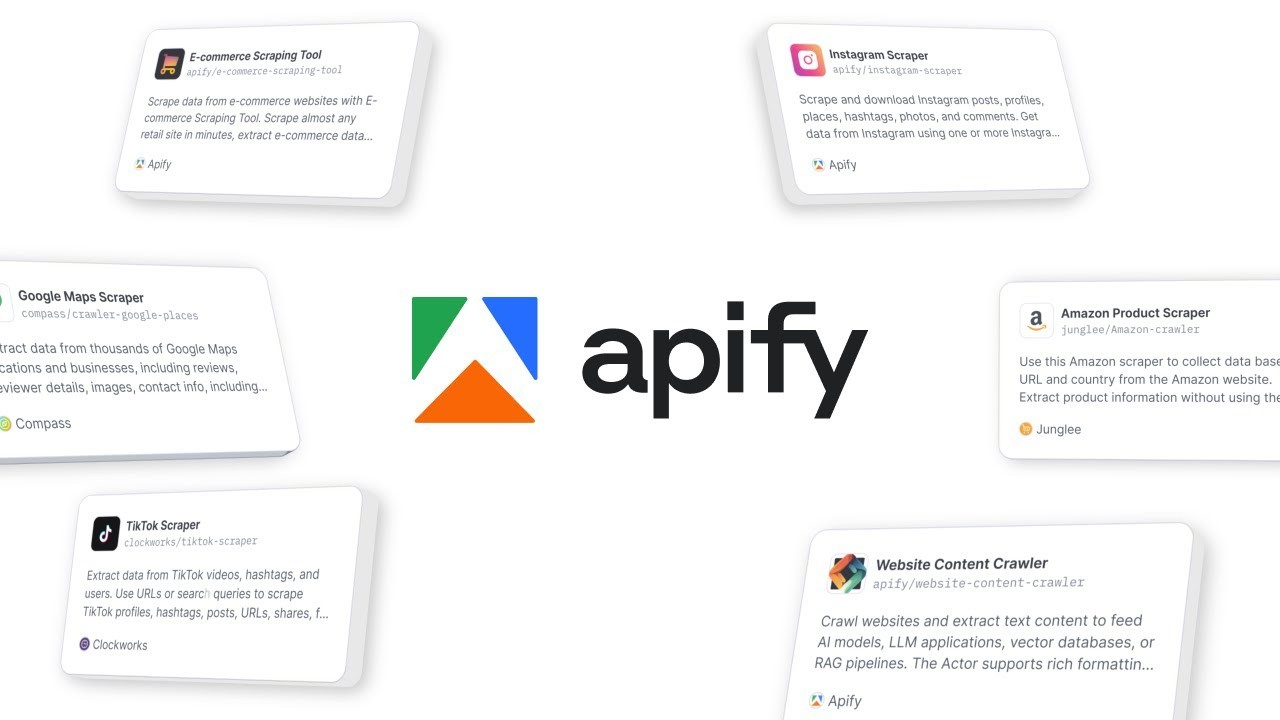
Apify is a full-stack web scraping and browser automation platform that lets you extract data from almost any website and automate repetitive online tasks at scale. Instead of building and hosting your own scrapers, you run ready-made cloud tools called Actors — or build your own using Apify’s open-source Crawlee library.
It is powerful enough for developers who need reliability and scale, yet the Apify Store of pre-built scrapers for sites like Google Maps, Instagram, Amazon, and LinkedIn also makes it approachable for non-coders who simply need clean, structured data.
With Apify’s ready-made Actors and the Apify Store, many common scraping jobs run without any coding — just pick a scraper, enter your target URLs, and download structured results. For anything custom, developers can build their own Actors with full control over the logic.
Apify runs a real headless browser, so it handles modern sites built with AJAX and JavaScript. It can wait for content to load, click buttons, scroll, and interact with dynamic elements — making it reliable on pages that render data in real time.
Apify runs scrapers in the cloud, so large jobs execute on Apify’s servers in the background — not on your computer. You can schedule runs, scale to thousands of pages, and keep tasks going even when your machine is offline, which is ideal for bulk data collection.
Users can schedule scraping tasks to run automatically at set intervals such as daily, weekly, or custom times. This feature is especially useful for price tracking, news monitoring, and data collection without constant manual involvement. It helps save time and increases efficiency.
Once scraping is complete, data can be exported in various formats including Excel, CSV, and JSON. This flexibility allows users to analyze, share, or integrate the data into other systems or tools depending on their project or business needs.
Apify offers a free plan with monthly usage credits that cover small scraping and automation jobs. As your needs grow, you move to usage-based paid plans that scale with your compute and proxy usage — so you only pay for what you actually run.
Apify provides detailed documentation, video tutorials, an active community forum, and email support, with priority help on higher-tier plans. Because you can start from ready-made Actors and step-by-step guides, the learning curve stays manageable even for newcomers.
Apify pairs a large library of ready-made scrapers with a full platform for building and running your own automations. The highlights that stand out in day-to-day use:
Apify offers an extensive set of video tutorials, docs, and academy courses that walk you through the platform — from running your first Actor to building custom scrapers and scheduling cloud runs. Content is available on the Apify website and YouTube, covering topics like the Apify Store, proxy setup, and integrations, which makes onboarding quick and shortens the learning curve.
Apify offers a free plan plus usage-based paid tiers (Starter, Scale, and Business/Enterprise). Every plan includes the Apify Store, cloud runs, storage, scheduling, and proxy access, with higher limits, more concurrency, and priority support as you move up. Because billing is usage-based, you pay for the compute units and proxy traffic you actually consume — so it is easy to start small and scale as your needs grow.
Pros
Cons
Overall, Apify is one of the most capable scraping and automation platforms available — a strong choice if you want ready-made tools plus room to build your own.

Apify is powerful, but depending on your budget, coding comfort, or the type of data you need, another tool may fit better. If you want a plug-and-play scraping API, a no-code point-and-click tool, or large-scale residential proxies, these are the Apify alternatives worth comparing:

Box Inc is a leading enterprise content cloud platform helping businesses securely store, share, sign and collaborate on files with granular access control. In this Box Inc review by IdealOnlineBusiness.com, we evaluate the Business and Enterprise plans, Box Sign electronic signatures, Box AI, integrations with Microsoft 365, Google Workspace, Salesforce and Slack, advanced governance and compliance tools, security certifications including FedRAMP and HIPAA, pricing tiers, and verified customer feedback from G2 and Capterra.
Explore More


Filemail is a high-speed file transfer platform that lets you send files of any size, up to 5TB per transfer, without compression, signup, or installation. In this Filemail review by IdealOnlineBusiness.com, we look at its pricing, features, transfer speeds, and ease of use based on public G2, Trustpilot, and Capterra reviews. Whether you are a video editor, designer, legal professional, or anyone moving large files, Filemail promises ultra-fast transfers with no file size limits and enterprise-grade security.
Our analysis of Filemail file transfer reviews shows the platform is trusted for raw speed, no signup requirement for senders, custom branding, and detailed tracking. It holds a 4.6/5 rating on G2 with 250+ reviews and high marks on Trustpilot. Users praise the UDP-accelerated transfers, password protection, white-label branding, and Outlook integration, while some flag the free tier upload limits. For teams sharing massive files, Filemail is a robust option.
Explore More






Below are quick answers to the questions people ask most before choosing Apify — what it is, how it works, what it costs, and how it compares to other web scraping tools.
⚠️ Affiliate Disclosure: This site contains affiliate links. We may earn a commission when you purchase through our links at no extra cost to you. Results are not typical.