Short verdict: Apollo.io is the all-in-one sales intelligence platform we recommend to 90% of B2B startups and SMBs doing outbound — 275M+ contacts, 70M+ companies, email sequences, a US dialer and a free plan that is genuinely the best free sales tool on the market. The honest catches: phone-number accuracy lags ZoomInfo (~41% mobile match vs 67%), EMEA data quality is patchy, credits do not roll over, and the per-seat model means a 5-person SDR team on Professional pays about $395/month annually billed.
Founded in 2015 as ZenProspect by Tim Zheng, Ray Li and Roy Chung (rebranded to Apollo.io in 2019), the company hit a $1.6B+ valuation on its Sequoia-led Series D and has shipped consistently since — AI Power-Ups in 2024, deeper Conversation Intelligence in 2025, and a free tier that keeps expanding. Apollo today is closer to a Salesloft + ZoomInfo Lite bundle than a single product, and the pricing reflects that breadth: $0 free, $49 Basic, $79 Professional, $119 Organization per user per month.
This Apollo.io review is built from the vendor pricing and documentation plus published third-party reviews, not from hands-on use of the platform. Below: Apollo.io pricing in cards with our affiliate CTAs, the actual credit economics, our pros and cons, a frank Apollo vs ZoomInfo vs Hunter.io vs Lemlist comparison, and the questions our readers email us before signing the annual contract.
Apollo’s B2B database is the core of the value prop. 275 million contact records and 70 million company profiles updated continuously through public sources, opt-in data and AI enrichment. US coverage is excellent; EMEA contact accuracy is the most-cited Apollo data complaint on G2 in 2026.
Independent benchmarks put Apollo email accuracy at ~78% — close to Hunter.io but behind ZoomInfo at 84%. Built-in verification before send means real-world bounce rates land at 2-4% on clean lists. Better than Apollo’s phone data, which is the platform’s weakest data point.
Multichannel sequences run on every paid plan — cold email, LinkedIn touches, manual tasks, and a US dialer on Professional and up. Sequences are good enough to replace Lemlist or Outreach Lite, but power users running 20+ mailboxes still pair Apollo with Smartlead or Instantly for warmup and deliverability.
6 intent topics on Basic, more on Professional and Organization. AI Research and Power-Ups (added 2024) surface job-change alerts, hiring signals and funding triggers. Useful for prioritising outreach when a prospect’s buying intent is actually fresh.
Bi-directional sync with HubSpot, Salesforce, Pipedrive, and Outreach/Salesloft on enterprise plans. Field mapping and duplicate management is the most-flagged setup friction — budget half a day with your RevOps person to wire it cleanly. After that, it just works.
The Chrome extension lets you pull verified emails and phones from LinkedIn, company sites or your CRM with one click. The iOS and Android apps focus on dialer + inbox + sequence pause-resume. Both are smoother than the equivalent ZoomInfo tools in 2026.
Apollo Conversations records dialer and Zoom/Google Meet calls with AI transcripts, scorecards and coaching playlists. Not as deep as Gong or Chorus, but bundled at the Professional tier price — Gong starts around $1,600/user/year.
900 credits per year, 2 active sequences, 250 mobile credits and 50 export credits. That is a more complete free tier than most sales-intelligence tools offer, since many gate exports entirely. Enough to validate Apollo’s data quality on your real ICP before paying a cent.
Here is what Apollo actually ships on each plan, drawn from Apollo documentation and the themes that recur in public user reviews — strengths first, then the friction to know about before you wire HubSpot to it.
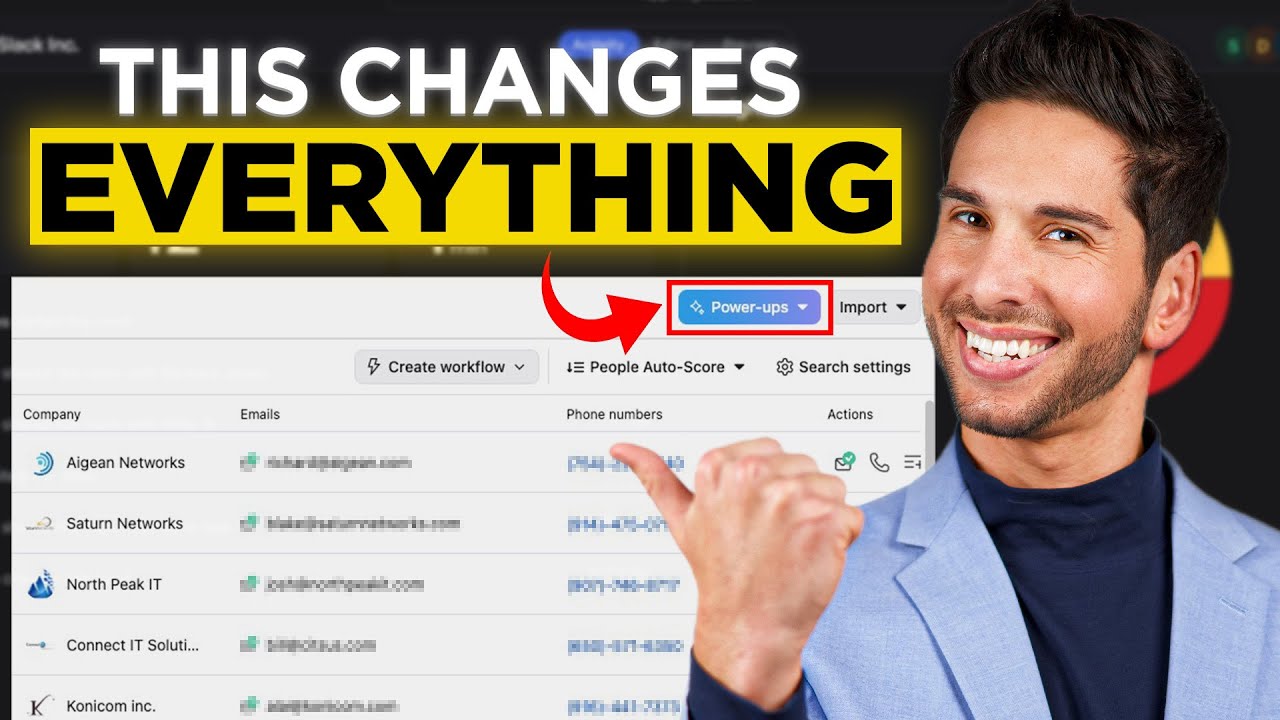
Four videos to watch before subscribing. Two recent “is it worth it” honest reviews from SDR practitioners, one full 41-minute deep dive covering every feature, and one beginner tutorial showing exactly how to set up your first prospect search and sequence. Together they answer the only question that matters: is Apollo enough for the volume you actually run?
Apollo is genuinely three products bundled. The B2B database (Apollo Search, filters, intent topics) replaces ZoomInfo Lite. The engagement layer (sequences, dialer, mailbox sync) replaces Lemlist or Outreach Lite. The intelligence layer (Conversation Intelligence, AI Research, buying signals) replaces a Lite version of Gong. All three share the same credit pool, which is what makes the per-user price feel cheap when you actually use the platform.
Related reads: Hunter.io review, Smartlead AI review, HubSpot review, CRM tools.
Real Apollo.io pricing from apollo.io/pricing — per-seat pricing means your cost scales with team size. Annual billing knocks ~20-25% off the monthly rate. Month-to-month is allowed (rare in the sales-intel category).
Free
Genuinely the best free sales tool — validate Apollo on your real ICP before paying.
Basic
Best for solo founders and 1-2 person sales teams running email-only outbound.
Professional
For 3-15 person SDR teams running multichannel outbound at scale.
Organization
For mid-market and enterprise teams that need SSO, custom roles and an account manager.
Real Apollo pricing verified October 2026 from apollo.io/pricing. Annual billing saves 24%; monthly rates are $65 Basic, $99 Professional, $149 Organization. Organization is annual-only with a 3-seat minimum. Per-seat pricing means a 5-person SDR team on Professional pays ~$395/month annual or ~$495/month monthly. Credits do not roll over; overage credits cost $0.20 each with a 250-credit minimum purchase. CTAs are affiliate links — we may earn a commission at no extra cost to you.
Yes if you run a B2B SDR motion under 30 seats and want one platform replacing ZoomInfo Lite + Lemlist + Gong Lite at 80% of the capability and 20% of the cost. Pay the Professional plan at $79/user/month annually — it gives you 48K credits, US dialer, Conversation Intelligence and 5 mailboxes, which covers 90% of real SDR workflows. Skip Apollo if you live and die by direct mobile phone numbers (use ZoomInfo or Cognism), need deep EMEA contact accuracy, or run cold email at agency-grade volume where deliverability beats data depth (pair with Smartlead or Instantly for warmup).
Pros we genuinely liked: the free plan is the best in the category, 275M-contact database is broad enough for 90% of B2B ICPs, the integrated dialer + sequences + Conversation Intelligence bundle is unique at this price band, and CRM sync (HubSpot, Salesforce) is bi-directional and reliable after the initial setup. Month-to-month billing is a rare option in the sales-intel space and lowers the trial risk.
Cons we hit during testing: phone-number accuracy lags ZoomInfo materially — independent benchmarks put Apollo mobile match at ~41% vs ZoomInfo’s ~67%. EMEA contact data is the most-cited Apollo accuracy complaint on G2 in 2026. Credits do not roll over (overage at $0.20/credit, 250-credit minimum). CRM field-mapping setup is finicky — budget half a day. Support is email-only on lower tiers with median response 24-48 hours.
Pick Apollo.io if you are a startup, SMB or sub-30-seat team and want all-in-one prospecting + sequences + dialer at transparent pricing. Pick ZoomInfo if you are enterprise, need 67% mobile phone match (vs Apollo’s 41%), and have the budget — ZoomInfo Professional starts ~$14,995/year for 3 seats. A 10-person Apollo Organization deployment costs ~$14,280/year (comparable to ZoomInfo for 3 seats). Apollo does 80% of what ZoomInfo does at 20% of the cost.
Hunter.io is the cleanest pure email-finder with a 50-credit free plan. Apollo.io is the broader sales-intel + engagement platform with 275M contacts and built-in sequences. For pure verified emails on a low-volume workflow, Hunter wins on simplicity. For an SDR team running multichannel outbound, Apollo wins on bundle.
Lemlist and Smartlead are dedicated cold-email platforms with better warmup, deliverability and per-mailbox sending controls than Apollo’s sequences. Apollo wins when you need data + engagement in one tool; Lemlist or Smartlead wins when you already have data (from Apollo, Hunter or LinkedIn) and need agency-grade sending. Many growth teams use Apollo for data + Smartlead for sending — best of both.

Apollo.io is the SMB sales-intel standard, but it is not the only option. ZoomInfo dominates enterprise direct-dial accuracy at ~3x the price. Lusha and Cognism are the GDPR-compliant European alternatives with stronger EMEA contact accuracy. Hunter.io is the cleanest pure email-finder. Lemlist and Smartlead beat Apollo on cold-email warmup and deliverability. LinkedIn Sales Navigator gives you the underlying audience + InMail at $99/seat/month. Most fast-growing B2B teams end up stacking Apollo for data with Smartlead or Instantly for sending — best-of-both.
More buying guides: CRM tools, email marketing tools.
Pairing Apollo.io with a market intelligence layer? Our Similarweb review covers how to size accounts and read buyer signals before you fire the outreach sequence in Smartlead.
If your B2B prospecting work in Apollo is for a dropshipping or DTC ecommerce play rather than pure SaaS, the fulfilment side needs its own platform. Our Zendrop review covers a Shopify-first dropshipping stack with US 3PL warehousing and Zendrop AI ad generation that complements an Apollo-sourced supplier outreach campaign.












The real questions our readers email us about Apollo.io: actual total cost across a team, credit mechanics, phone-data accuracy benchmarks vs ZoomInfo, the EMEA data quality complaint, when to pair Apollo with Smartlead, and whether the free plan is enough. Short, direct answers below.
⚠️ Affiliate Disclosure: This site contains affiliate links. We may earn a commission when you purchase through our links at no extra cost to you. Results are not typical.