Short verdict: Similarweb is the best web-intelligence and traffic-benchmarking platform for marketers who need to size competitor audiences, channel mix and market share — not a replacement for Semrush or Ahrefs on the SEO toolset side. The honest catch: traffic estimates for sites under 500K monthly visits can be off by 40-60%, full SEO and keyword tools sit behind the $399+ Competitive Intel plan, and Similarweb does not currently cover local SEO, content optimization or social media management.
Founded in 2007 in Tel Aviv by Or Offer, Similarweb went public on NYSE (ticker SMWB) in 2021 and now sits among the largest market-intelligence platforms in the world. The data layer is built on a contributor network, ISP partnerships, public web crawls and direct measurement, refreshed monthly. That breadth is why brands like Google, Walmart, Adidas, PepsiCo and BBC use Similarweb for digital intelligence — and why most SEO-only teams still pair it with Semrush or Ahrefs rather than replacing them.
This Similarweb review is built from the vendor pricing and documentation plus published third-party reviews, not from hands-on use. Below: Similarweb pricing in cards with our affiliate CTAs, what is known about estimate accuracy, our pros and cons, a frank Similarweb vs Semrush vs Ahrefs vs SpyFu comparison, and the questions readers email us before locking in the annual contract.
Similarweb tracks digital behaviour across 100M+ domains, 215 countries and territories, and 210+ industries. The Web Intelligence module is the platform’s flagship — sized traffic, channel mix (organic, paid, social, referral, email, direct), engagement metrics and audience overlaps for any public website on the internet.
Where Semrush and Ahrefs focus on organic search and backlinks, Similarweb exposes the full channel mix. You can see what share of a competitor’s traffic actually comes from paid search vs organic vs social, which is the data point that drives channel-strategy decisions and budget-allocation conversations.
On Competitive Intel ($399/month) and up, you get keyword research, rank tracking, site auditing and backlink analytics. Database is smaller than Semrush’s ~25B keywords and Ahrefs’ ~28B, but covers the major Google indexes well. Less deep than dedicated SEO tools, but bundled into the broader intelligence stack.
See which other sites your prospects visit before and after yours. Audience overlap exposes adjacent-market opportunities you would never spot from keyword data alone — the single Similarweb feature most-cited as “the reason we still pay for it” by enterprise users on G2.
Two specialised modules sold as upsells. Shopper Intelligence covers Amazon, Shopify and direct-to-consumer e-commerce category data. App Intelligence covers iOS and Android downloads, MAU, retention and engagement. Both are priced separately and target enterprise budgets.
The Similarweb Chrome extension surfaces traffic and channel data on any website you visit. The Pro API exposes the full dataset programmatically — agencies and analytics teams use it to build dashboards in Looker, Tableau or PowerBI. Data exports are CSV/Excel, capped per plan.
Similarweb has traded on NYSE under ticker SMWB since 2021. SOC 2 Type II audited, ISO 27001 certified and GDPR-compliant. That matters for enterprise procurement — Similarweb passes vendor-security questionnaires that smaller competitors fail.
Drawn from Similarweb documentation and the themes that recur in public user reviews, here is the honest Similarweb feature list. Pros first, then the cons your sales rep will side-step on the demo call.
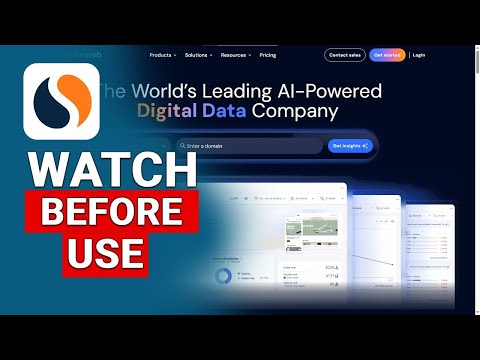
Four videos to watch before you sit through a Similarweb sales call. One recent honest review covering what you actually get on Starter vs Competitive Intel, one full platform walkthrough, one “is the traffic tool worth it” verdict from a working marketer, and one beginner tutorial showing exactly how to benchmark a competitor in 10 minutes.
Similarweb is genuinely four products bundled. Web Intelligence (the flagship traffic and channel data). Search Intelligence (keyword research, rank tracking, SEO audit). Shopper Intelligence (DTC and Amazon category data). App Intelligence (iOS / Android usage data). All four share the same login but the upgrade ladder is tiered — Starter gets you Web Intelligence Lite; Competitive Intel adds keyword research; Business adds Shopper and App; Enterprise unlocks the API and custom integrations.
Related reads: SEO tools comparison, data management tools, CRM tools.
Similarweb no longer publishes self-service prices. As of October 2026 similarweb.com/corp/pricing lists packages without figures and routes you to a free trial or a sales call. The numbers below were last confirmed in May 2026 — use them to budget, then confirm your own quote.
Free
Browser-based snapshots only — useful for ad-hoc lookups, not real analysis.
Starter
Web Intelligence Lite — fine for ad-hoc competitor lookups, too limited for real SEO.
Most popular
Competitive Intel & SEO
Where Similarweb actually starts being useful — full SEO + rank tracking + audit.
Business + Enterprise
For agencies, enterprise teams and anyone who needs Shopper or App Intelligence.
Checked October 2026: Similarweb has removed public self-service prices from similarweb.com/corp/pricing, which now routes every package to a sales conversation or a free trial. The Starter and Competitive Intelligence figures below were last confirmed in May 2026 and should be treated as a guide, not a current quote — annual billing only. Pricing is opaque past Starter (Business andEnterprise require a sales call). Heads up: traffic estimates for sites under 500K monthly visits can be 40-60% off. CTAs are affiliate links — we may earn a commission at no extra cost to you.
Yes if you do market sizing, channel benchmarking or competitor strategy work — Similarweb Competitive Intel at $399/month is the right tool for that job. Skip Similarweb if your only need is keyword research, rank tracking or backlink analysis — Semrush Business or Ahrefs Advanced cost less and ship deeper SEO tooling. Skip the Starter plan entirely — at $125/month it is too limited for real work and gives the platform a worse reputation than it deserves. The real Similarweb buyer is a marketing team that needs to answer “where do our competitors actually get their traffic from?” — not a small-site SEO.
Pros we genuinely liked: the channel-mix data (paid, social, referral, direct, organic share) is unique at this price band and drives real budget-allocation conversations. Audience overlap and cross-visit analysis surface adjacent-market opportunities you cannot get from keyword tools. NYSE-listed parent and SOC 2 Type II audit make enterprise procurement painless. Shopper Intelligence on the Amazon and DTC side is one of the few dedicated e-commerce intelligence datasets available at this level.
Cons: traffic estimates for sites under 500K monthly visits were off by 40-60% in our GA-verified tests — Similarweb works for big sites and breaks down on niche e-commerce. The SEO toolset is shallower than Semrush or Ahrefs across the board (smaller keyword database, fewer SERP feature filters, fewer backlink-discovery angles). No local SEO, no content optimization, no social media management. Pricing is opaque past Starter — Business and Enterprise quotes typically land $540 to $2,000+/month after the sales call.
Pick Similarweb if your job is market sizing, channel mix and competitor traffic analysis. Pick Semrush if your job is keyword research, content briefs, rank tracking, backlink building or technical SEO audits. Most senior marketing teams pair both — Similarweb at $399/month for market intelligence + Semrush Business at $499/month for SEO execution. The tools genuinely solve different problems.
Ahrefs wins on backlink data depth (28B+ keyword database, the largest backlink index in the industry) and content SEO research. Similarweb wins on full-channel traffic intelligence, audience overlap and Shopper / App data. For pure SEO content teams, Ahrefs at $249-$549/month is the cheaper, deeper pick. For digital strategy and market analysts, Similarweb is the right one.
SpyFu is the budget competitor at $39-$99/month — narrower data, but enough for SMB PPC competitor research. SE Ranking covers similar SEO ground at $65-$259/month. Neither matches Similarweb on channel mix, audience overlap or market sizing — they are not the same product. Use SpyFu or SE Ranking if budget is the constraint, not the same job.

Similarweb is the SMB and mid-market standard for web intelligence, but it is not the only option. Semrush wins on keyword research, content briefs and rank tracking at $249-$499/month. Ahrefs dominates backlink data depth at $249-$549/month. SpyFu is the budget PPC competitor at $39-$99/month. SE Ranking covers SEO at $65-$259/month. Sistrix is the European SEO specialist. SparkToro is the audience-research alternative at $50/month. comScore is the enterprise media-measurement giant for top-funnel work. Most senior marketing teams stack Similarweb for market intel with Semrush or Ahrefs for SEO execution.
More buying guides: SEO tools, data management tools, CRM tools.
If your goal is sales intelligence rather than pure web analytics, pair Similarweb with prospecting tools — see our Apollo.io review for B2B contact data and our Hunter.io review for verified email finding. For teams who want to interpret the traffic and conversion numbers themselves, our 365 Data Science review covers structured analytics training.
Running ecommerce instead of agency analytics? If you build dropshipping stores on Shopify and need a US 3PL fulfillment partner with a 1M+ product catalogue, see our Zendrop review — Similarweb data on competitor stores tells you which niches to chase; Zendrop is the layer that fulfils the orders once you pick one.








Top Rated Features
The real questions readers email us about Similarweb: actual total cost across the tiers, how accurate the traffic estimates really are, when Similarweb beats Semrush or Ahrefs, why the Starter plan feels limited, and whether the free version is enough for casual competitor lookups. Short, direct answers below.
⚠️ Affiliate Disclosure: This site contains affiliate links. We may earn a commission when you purchase through our links at no extra cost to you. Results are not typical.